FEATURED WORKS
Some works are more involved and need a longer gestation period before they become what they are. They are more satisfying if there has been a long engagement in finding a resolution. I am attempting here to shed a bit more light on how they came about, the thought processes and the actions that worked in tandem throughout the production process. By and large, when I started them there was no real indication of how they would turn out. I have failed miserably in the past where I have planned a work so precisely to the point of knowing the end result. There is no discovery and there are no surprises so what is the point.
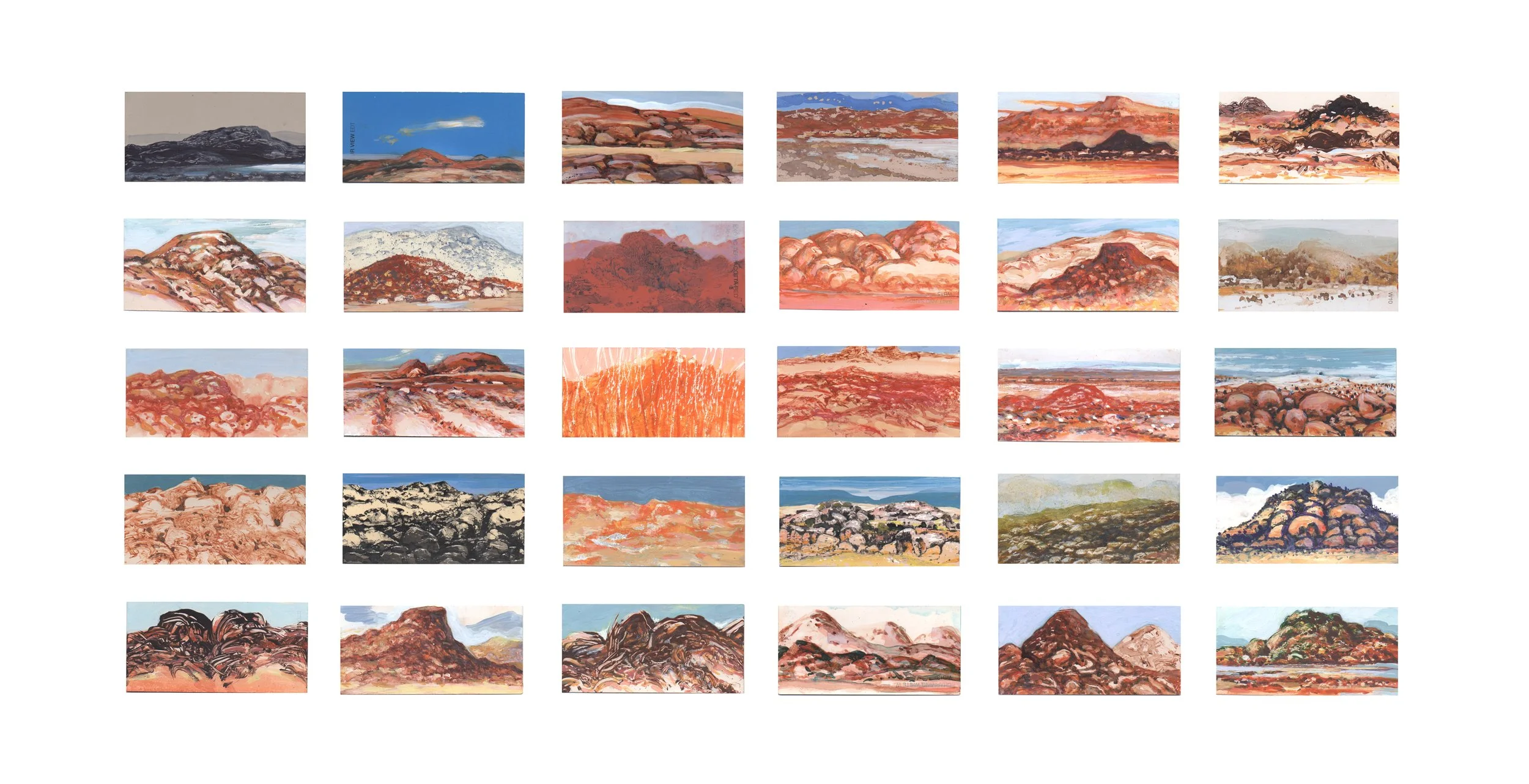
“GAZING OUT, LOOKING IN”
Kanku-Breakaways Conservation Park lies 25kms north of Coober Pedy in South Australia and forms part of the traditional country of the Antakirinja Matuntjara Yankunytjatjara people.
Seemingly formed during the evaporation of an inland sea, the area dates back 115 million years. The colours are astounding and vary over the course of the day.
This work was inspired by visiting this ancient site; some of the images are descriptive, others were done before and after the visit. It is really a personal response to a place and doesn’t attempt to capture what is there.
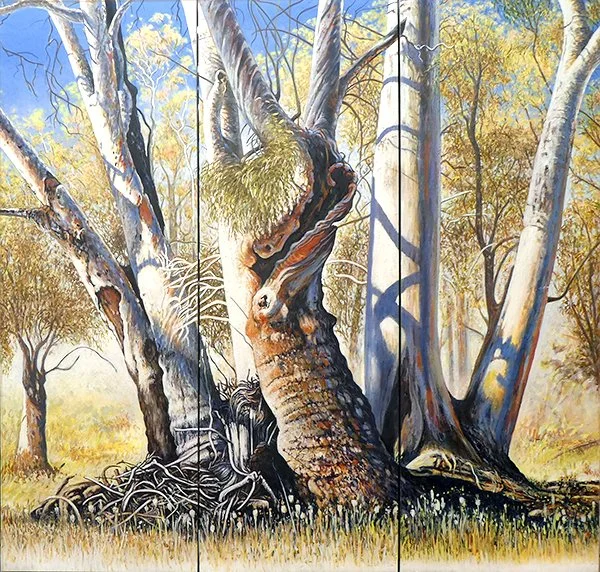
“There’s Always Something”
In the spring of 2022 Caroline and I made a short trip to the Ikara-Flinders Ranges National Park in South Australia.
One of the most striking features of this environment is the large number of old River Red gums that can be found in most parts of the Park. We saw them everywhere along dry creek beds and in areas prone to flooding. There is sufficient underground water to sustain large colonies. They even survived the overgrazing of around 120,000 sheep in the late 19th century before the park was established. The denudation and erosion and the introduction of weed species still couldn’t wipe out these tough old trees. Their history is both visible and invisible. They truly are magnificent.
This work is 120cms x 120cms, acrylic on three wood panels, and much bigger than I would normally paint. I felt the subject demanded to have more presence so it had to be reasonably large (in a small room it is large!).
This was painted for Caroline whose love and support for me has enabled us to experience great joy and survive difficult times during the 40 years we have spent together. Her tolerance, grace, wisdom, and courage are inspiring and her positive attitude and consideration of others (particularly me) will continue to impress me for all time. The way this tree appears seems to capture our lives together in so many ways: it is simultaneously old and new, it is scarred and crooked but still living and growing, has seen the best of times and the worst of times, and, above all, it is still standing.
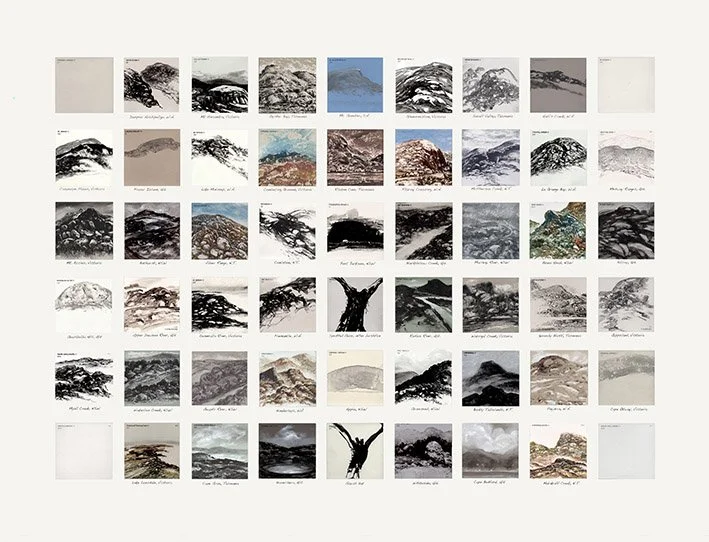
“whitegeographyblackhistory”
This work took about 12 months to complete. I didn’t have the idea when I started most of these panels.
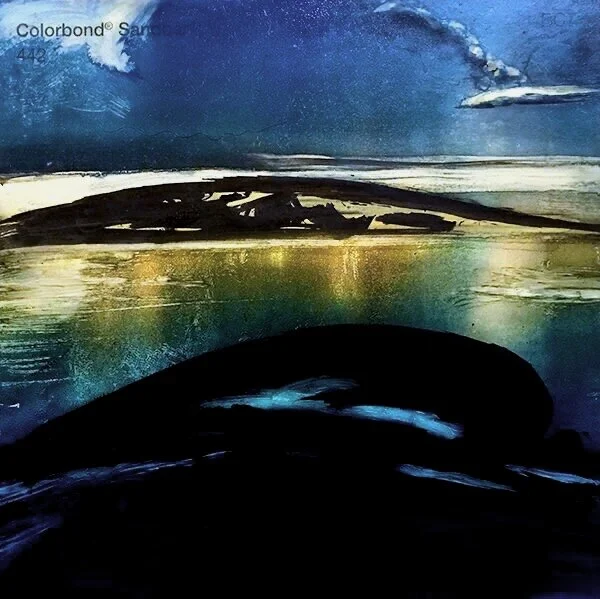
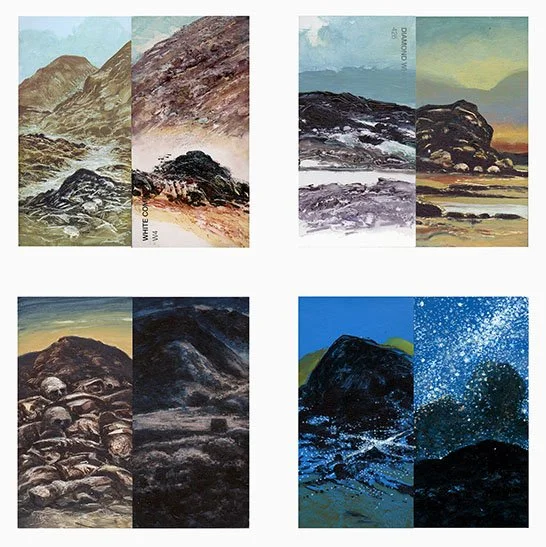
They are all painted on colour chart sample cards. The four corner panels are unpainted with the names of the samples still visible. They are “Original Canvas” (top left), “By Design” (top right), ”White Comfort” (bottom left) and “White Disclosure”(bottom right). These were chosen because of their relevance to the subject of the work which is the representation of just a few of the many massacre sites throughout Australia since colonisation. By having the corners blank the remainder of the images form a cross, The taking of the land was seemingly with God’s benediction.
For a more detailed record visit
https://c21ch.newcastle.edu.au/colonialmassacres/map.php
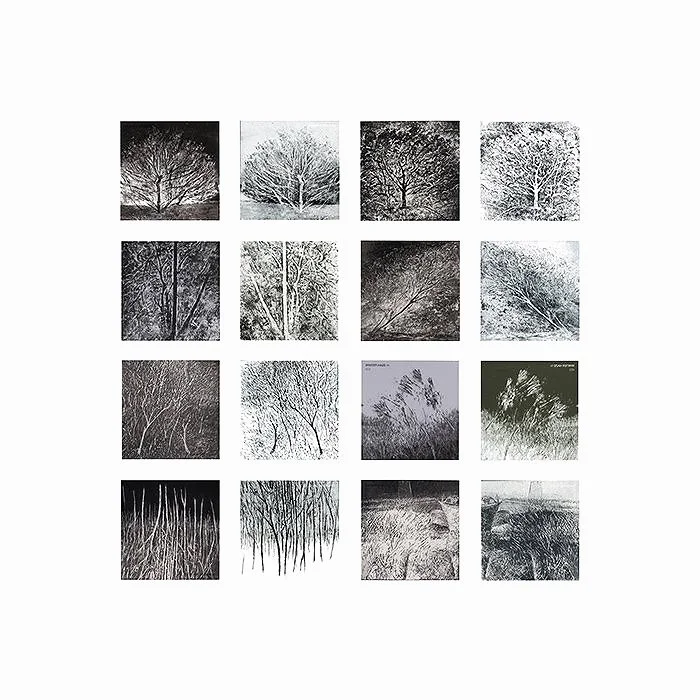
Photography and art have a long and interesting relationship. Photography kicked in around 1840 and was initially a threat to the artist who made a living by drawing or painting representations of the world in which they lived. Initially it tried to emulate the atmospheric qualities of paintings as a reaction to being dismissed as a novelty not a serious art form. It was too easy therefore unworthy. By the mid 20th C the lines between art and photography had become increasingly blurred, particularly with the advent of Pop artists using photographic images as the basis of their work (notably Warhol), Aaron Scharf’s “Art and Photography” is an excellent historical survey of the subject.
In the work above, vertical rows 1 & 3 are hand painted. As I worked on them they got darker and darker till I realised they were looking more like photographic negatives. I was then curious as to how they would look turned into positives using digital means. I scanned and then printed them.
Each positive was placed alongside its negative image but flipped into mirror mode.
NEGATIVE VIEW, POSITIVE OUTLOOK
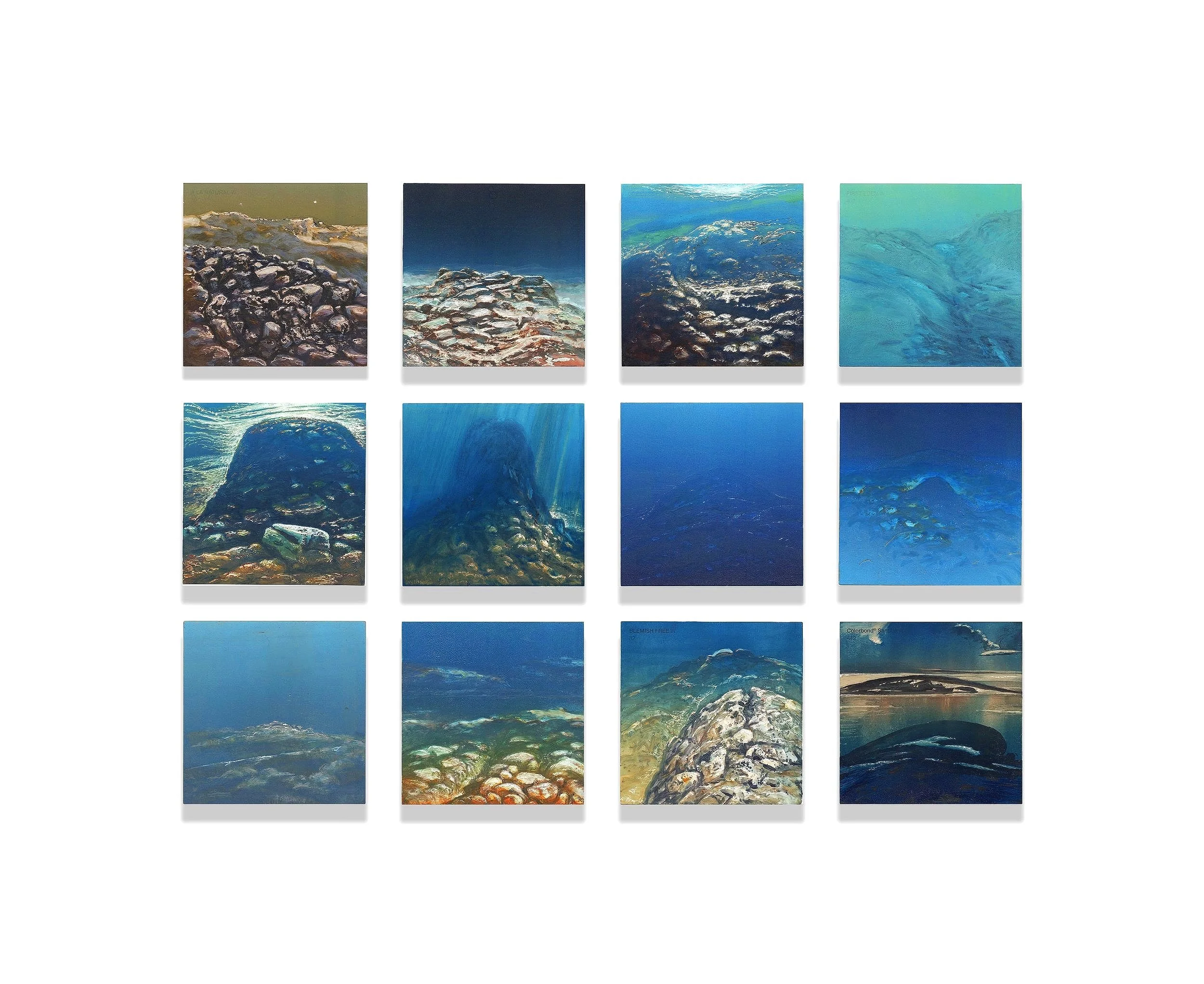
“Submerged Coastal Walk, NSW,
Australia, January 26, 2088”
We are part of the Oceanic region and we will be drawn irrevocably into the dramas that are unfolding because of events due to climate change. There seems to be very little political will in this country to face up to the inevitable; each of us could do more but politicians hold the cards.
We sorely need a new breed of young politicians who can work collectively across the political spectrum, transcending political ideologies and egos because this is the most serious and pressing problem ever to confront humankind.
The image reads from top left to bottom right, starting above ground, taking you down to the depths of the water that has submerged the walking path and bringing you out into an eerie still place just above water level. The world has changed.
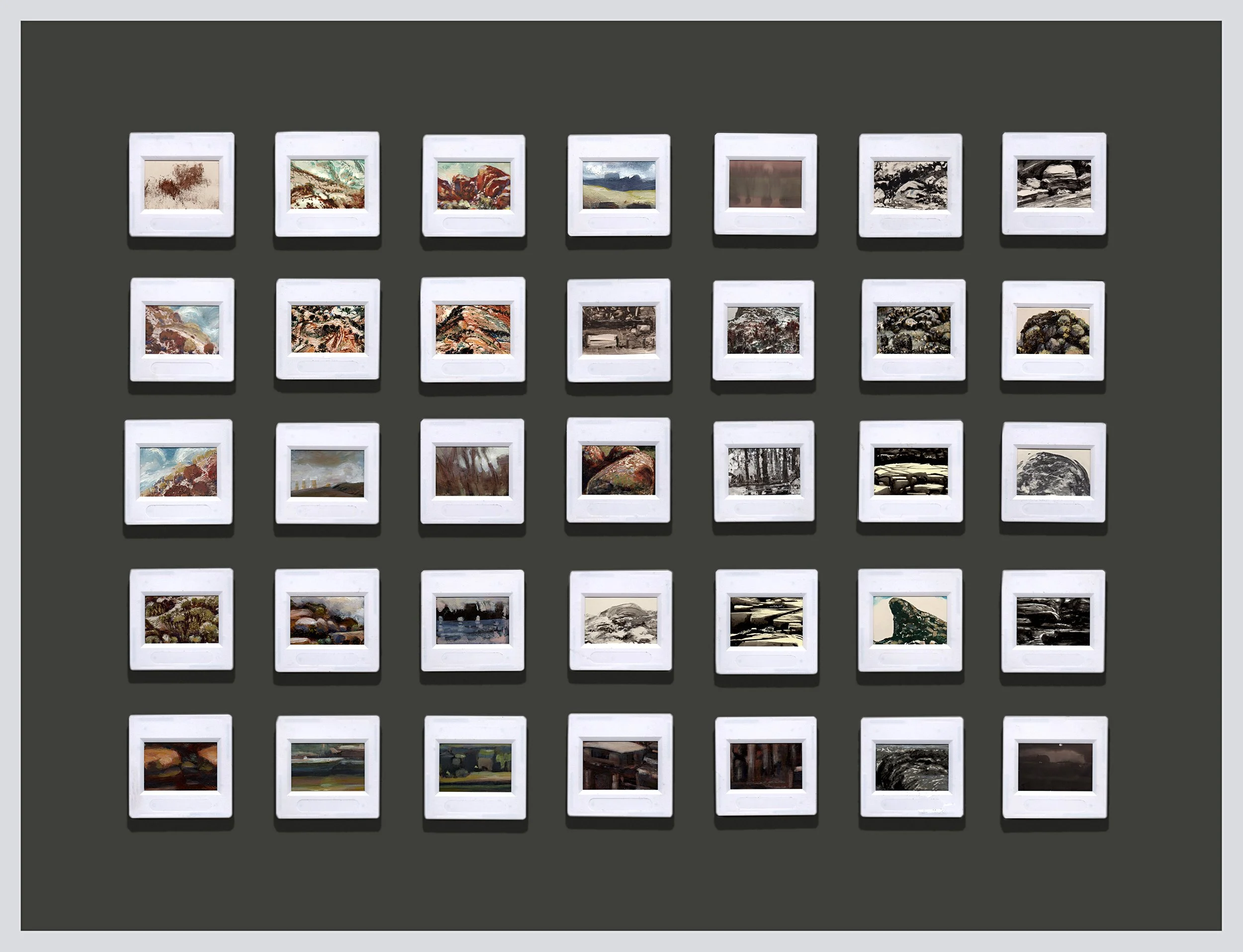
As I Recall
oil and mixed media on paper, plastic 35mm slide mounts
The magic lantern show, dating back to the 17th century, was the forerunner of the cinematic experience. People would pay to see images projected on a screen, the travelling showman telling stories or adding comments for the audience. The original images were hand-painted on glass slides using transparent colours.
The slides used here are opaque and cannot be projected. Each image is…
memory of place as impression place as idea as mood not the place inventing a memory invention as a process of recalling the record of an invention the realisation of a place a collection of memories imagining the past remembering the future

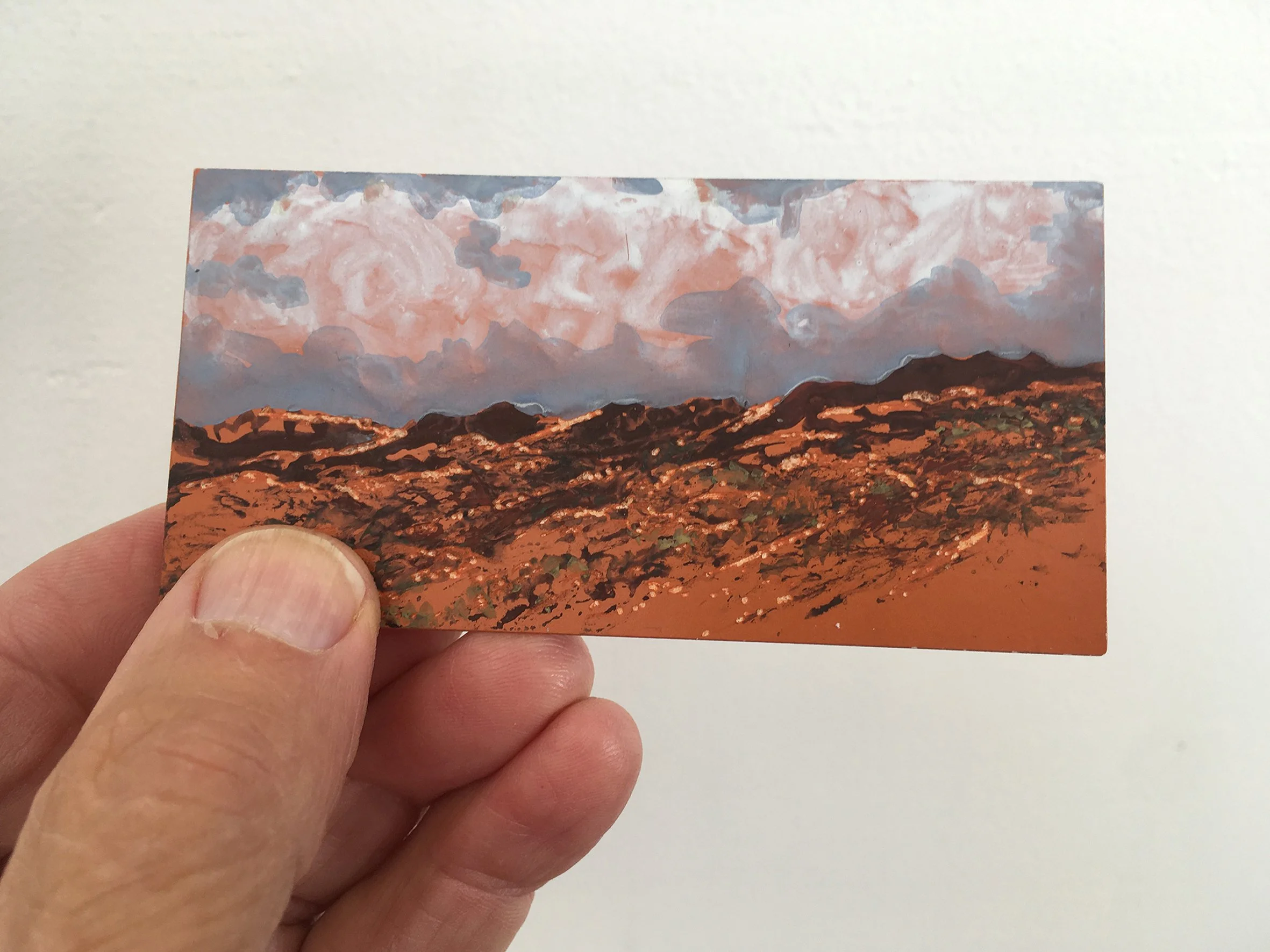
“Drawing in the Nights (Simpson Desert)”
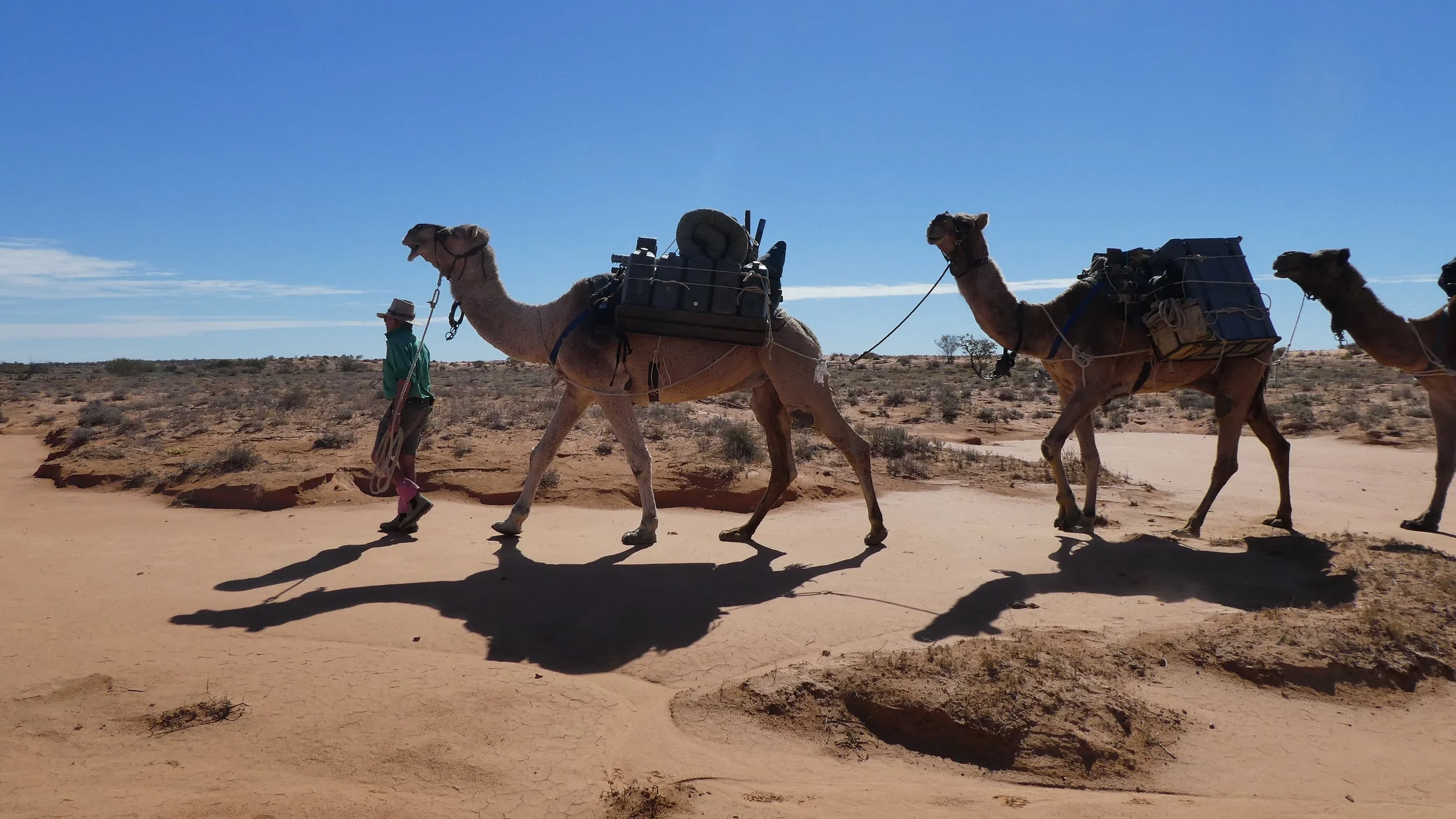
In May 2019 I had the good fortune to do a walk in the Simpson Desert with Australian Desert Expeditions
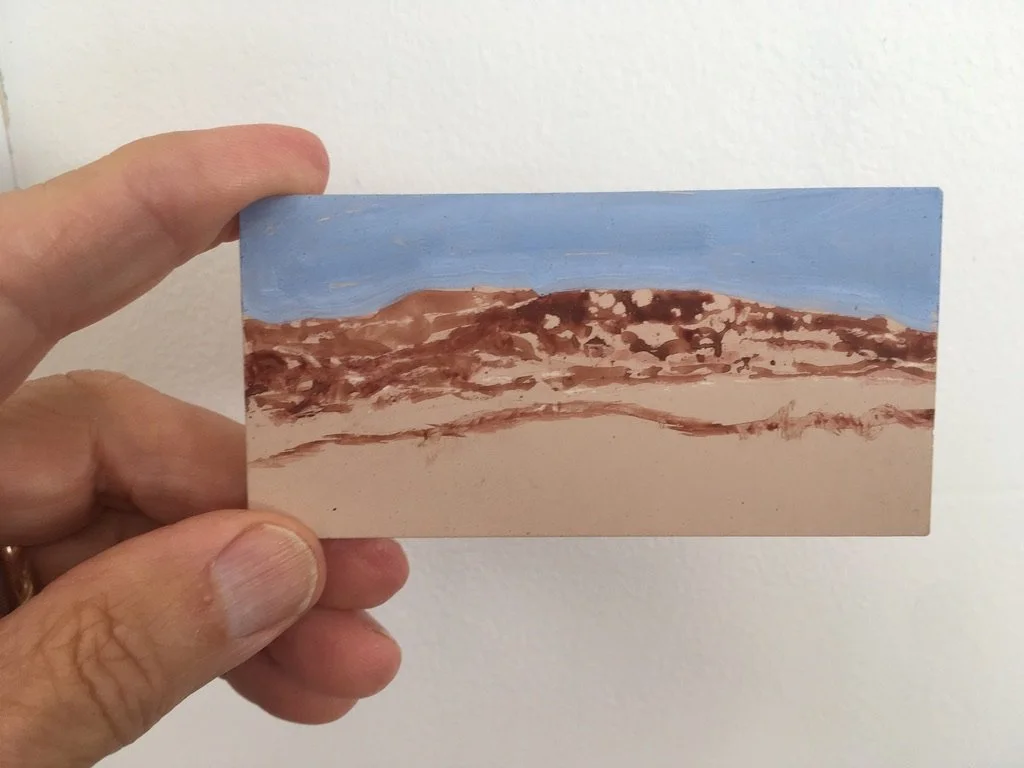
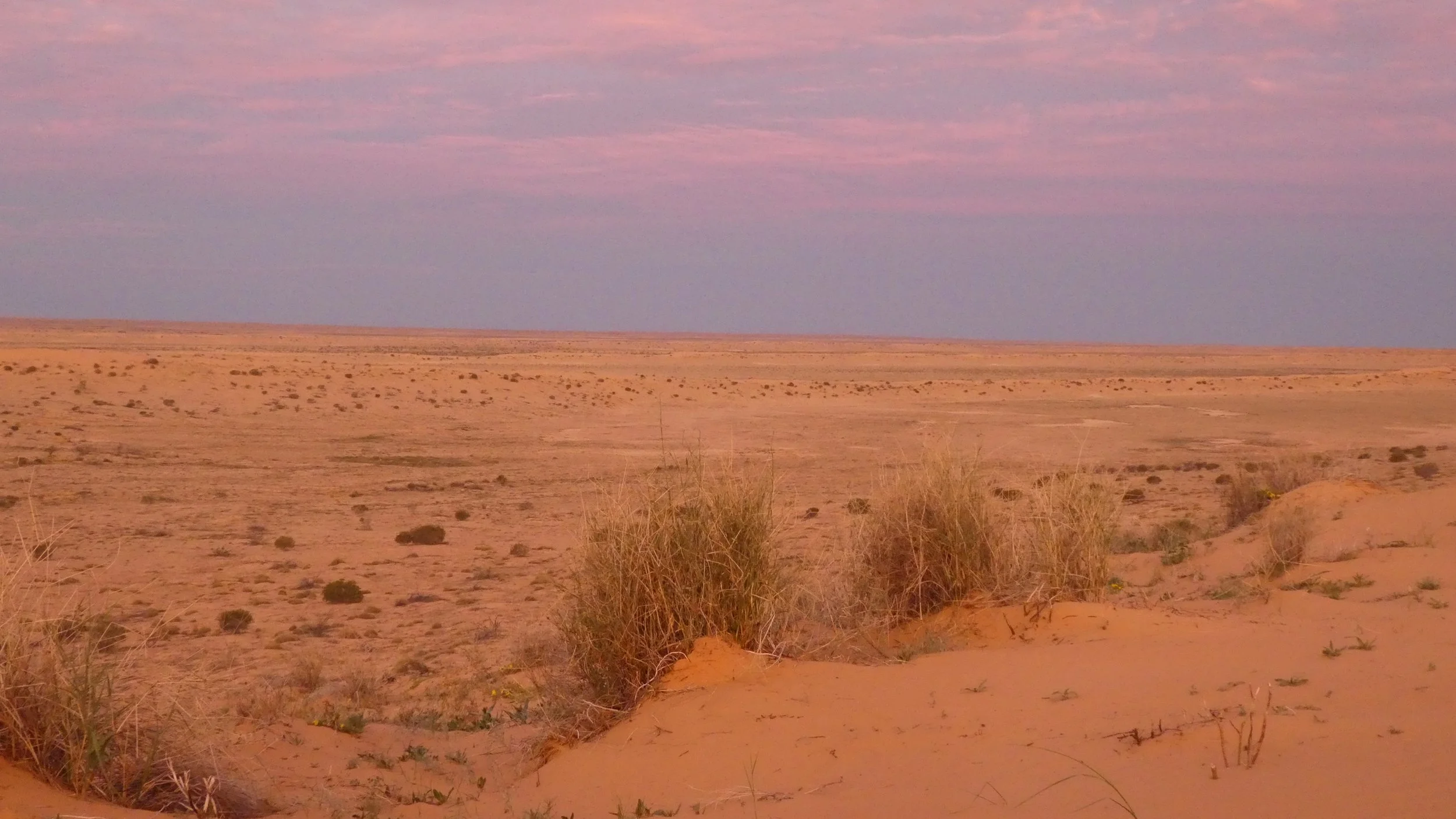
At the end of a long day walking I would go up to the top of a dune with my paints and cards and just respond to being in that place. Everyone has their own experience of the desert. It’s not even recognisable from these images but it’s just what I did there. The experience leaves a unique and lasting memory of a very special place.
“THEY OF THE NEVER NEVER”
Detail…
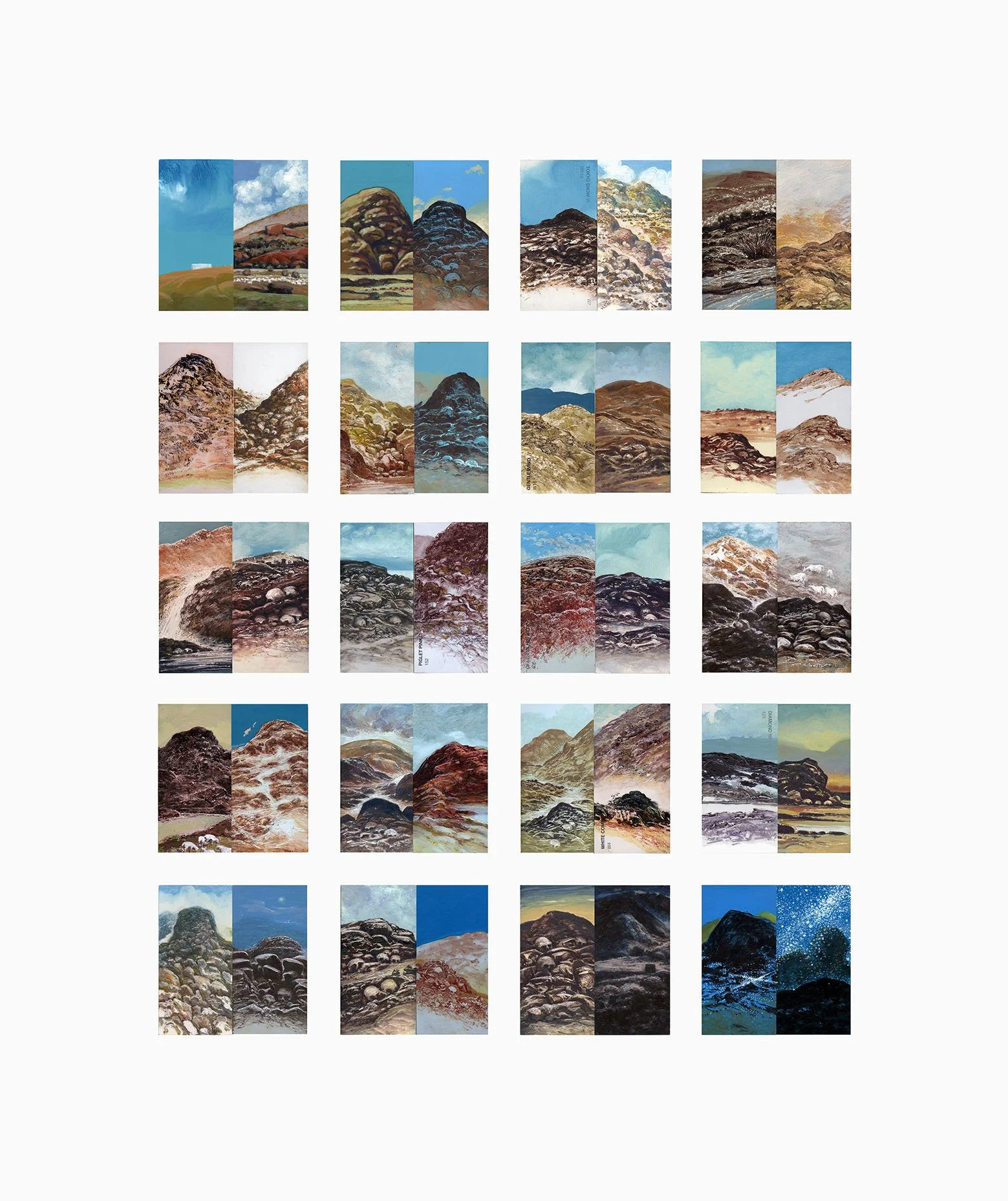
This work revisits the massacres of indigenous people in Australia. It was created in 2020, the working title being “2020 Vision", a comment on how we can look back and clearly see the magnitude of damage done to the indigenous owners of the land. There are 20 images of landscape and 20 images of landscape with human skulls and bones. The top left image shows the roof of a single western style abode in daylight. The bottom right shows an established country town at night. In between are images of sheep, cattle and goats grazing among the remnants of human skeletons. To date, we still haven’t had any official acknowledgement or revelations of the scale of the violence committed against Aboriginal people.
The title ended up as “They of the Never Never”, a reference to Jeannie Gunn’s 1908 book ”We of the Never Never”, which depicts life on a remote NT cattle station but omits any details of hunting and killing Aboriginals. It is considered a classic about the mateship and struggle of the white men in the untamed outback of the Territory. The title also refers to the notion of Terra Nulius, (land belonging to nobody), that Aboriginal people never never really existed in the eyes of the British invaders.
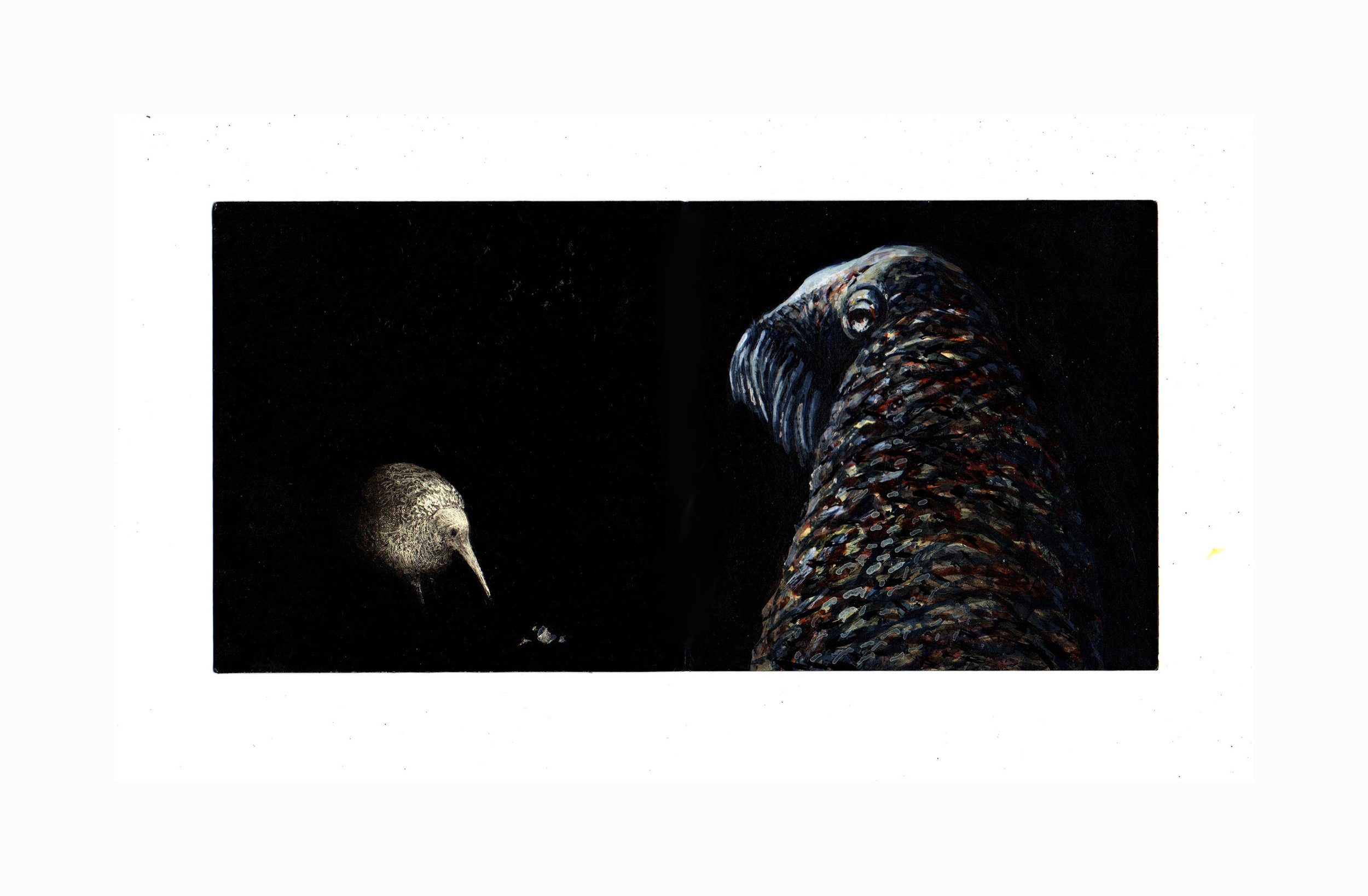
The Last Walrus Watches the Last Kiwi